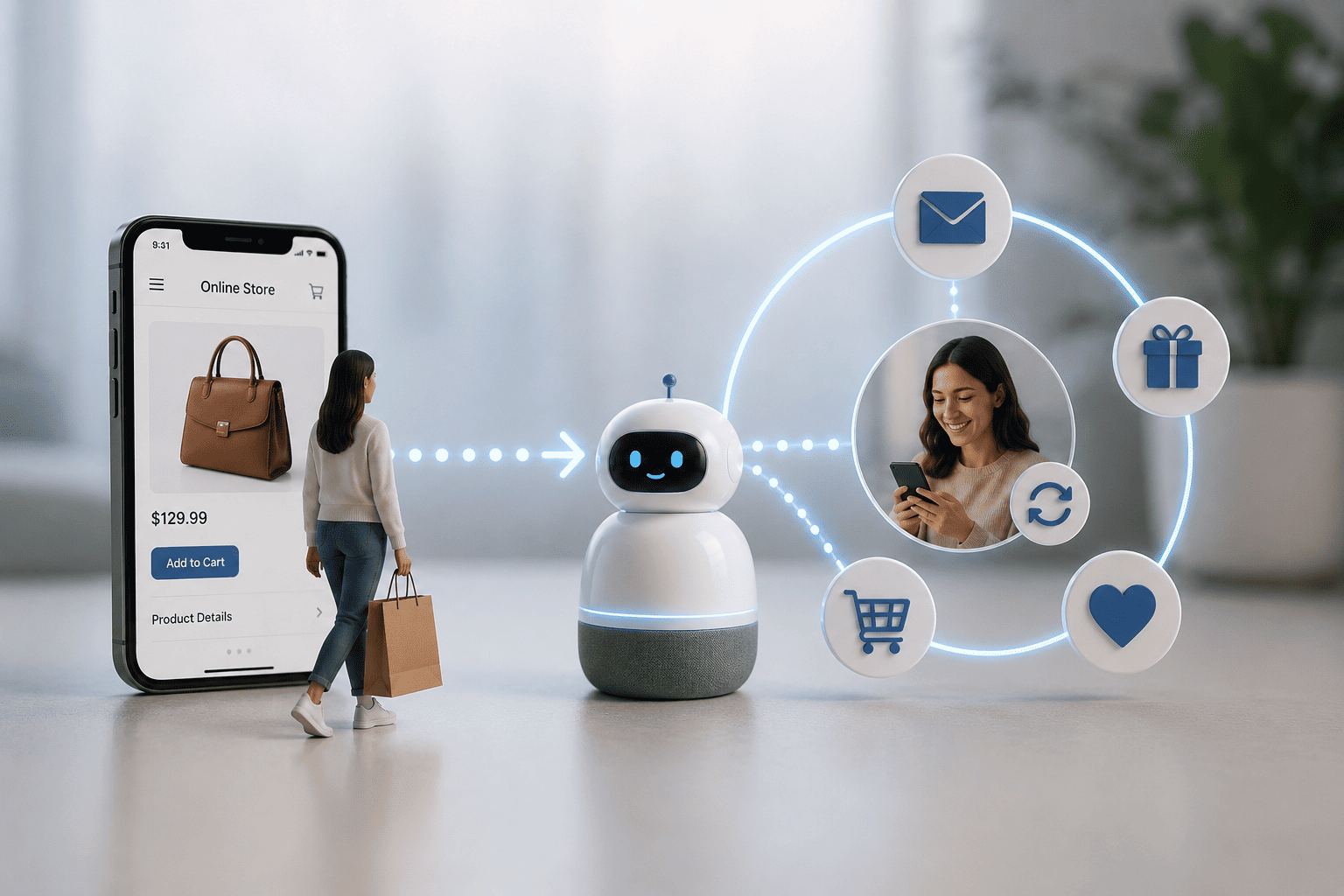
The most expensive customer a business ever acquires is the one who buys once and disappears not because they were unhappy, but because no one followed up. Customer retention automation exists precisely to close that gap, replacing the goodwill-and-memory approach most businesses rely on with a structured, always-on system. This post covers the core automated strategies that convert single transactions into long-term relationships: post-purchase email flows that reduce buyer's remorse, loyalty programs that reward behaviour without manual administration, retargeting sequences that bring past buyers back, referral mechanics that turn satisfied customers into a distribution channel, and personalised recommendation engines that make every follow-up feel considered rather than generic. Each strategy contributes to a measurable lift in customer lifetime value, the metric that ultimately determines whether a business grows or merely survives.
The First 48 Hours Are a Relationship, Not a Receipt
The period immediately after a purchase is the most psychologically potent window in the entire customer lifecycle. Buyers are engaged, emotionally invested, and if handled well, primed to become advocates. Most businesses waste it with generic order confirmation and silence.
Building the Post-Purchase Flow That Actually Works
An automated post-purchase sequence does three things in sequence: it validates the customer's decision, it educates them on getting maximum value from what they bought, and it checks in before any dissatisfaction has time to calcify. The structure is deliberate: a warm thank-you within the hour, a product education email on day two or three, and a satisfaction check-in around day seven. Customers who move through this sequence are measurably more likely to return within 60 days, and the trust built in that window compounds across every future interaction. Tools like Klaviyo and HubSpot specialists handle this sequencing natively, with conditional logic that adapts the flow based on whether the customer opened, clicked, or ignored the previous email.
Rewarding the Behaviour You Want More Of
Loyalty is not a feeling; it's a pattern. And patterns are best reinforced by systems, not by hoping customers remember why they liked you the last time they bought.
Loyalty Programs That Run Without You
Businesses can easily implement rewards automation using platforms such as Smile.io and LoyaltyLion, without any manual effort. This builds momentum in engagement with points scores, tiers unlocks, and redemption emails fire automatically, keeping your brand top of mind between purchases. The strategic value here extends beyond retention: a well-structured loyalty program generates behavioural data that informs everything from inventory decisions to email segmentation, feeding back into the broader customer retention automation system with increasing precision over time.
Referrals on Autopilot
A satisfied customer is one of the most underleveraged assets in any business. Automated referral programs managed through tools like ReferralCandy capture that goodwill at the moment it's highest and convert it into action. When a post-purchase email includes a personalised referral link with a clear reward, the friction between "I'd recommend them" and "I actually did" collapses entirely. The result is a scalable customer acquisition automation channel driven by a word-of-mouth trust rather than increasing ad spend.
Bringing Them Back Before They Drift
Retention is not only about the customers who stay engaged, but it's also equally about recognising the ones beginning to drift and acting before they're gone.
Retargeting, Replenishment, and the C.O.R.E Engine
Automated Facebook and Google retargeting campaigns targeting past buyers with complementary products or replenishment reminders work because the audience is already warm. Combined with CRM-triggered replenishment emails sent based on the typical lifespan of a product rather than a fixed calendar date, these touchpoints feel relevant rather than intrusive. For businesses implementing the C.O.R.E engine model, this layer of automation is where the loyalty loop closes: the customer doesn't just come back, they come back on a predictable cadence that compounds customer lifetime value quarter over quarter.
Personalised recommendation engines like Rebuy add a further layer, surfacing products based on actual browsing and purchase history rather than broad category assumptions, a distinction that matters enormously for conversion rates on return visits.
Conclusion
The businesses that master repeat customer revenue are not the ones with the most sophisticated tools; they are the ones who treat the post-sale relationship as a designed experience rather than an afterthought. Automate repeat customers not as a cost-cutting measure, but as a commitment to the standard of experience every buyer deserves after the first transaction. The infrastructure exists. The question is whether your business is built to use it deliberately. If you're ready to design that system from the ground up, BEAM Automation builds and manages the entire customer retention engine so the relationship keeps running long after the sale is done.